Lithium solar batteries for Pakistan
51.2 V LiFePO4 batteries from 5 to 20 kWh for 48 V hybrid inverters: power through load-shedding, and keep more of your own solar for the evening now that exported units earn less. Shipped by sea to Karachi.
What we keep in mind for Pakistani installs
Load-shedding backup
A 5 kWh battery runs lights, fans, a fridge and Wi-Fi (about 300 W) for roughly 13 hours; a 10 kWh battery doubles that.
Net billing
Since February 2026, units exported to the grid are bought back at a lower rate than the units you buy. A battery stores the afternoon surplus for the evening instead of exporting it.
Summer heat
All our 51.2 V batteries discharge up to 60 °C and charge up to 55 °C. Install them indoors or in shade with airflow; IP65 models suit covered outdoor walls.
Which battery for which hybrid inverter?
Swipe sideways to see all columns →
| Inverter | Battery current at full load | What we suggest |
|---|---|---|
| 4 kW | 82 A | One 10, 15 or 16 kWh unit runs at about its recommended 100 A; add a second unit for long full-power use |
| 6 kW | 123 A | One 16 or 20 kWh unit (200 A max), or two 10 kWh units if it runs near full power for hours |
| 8 kW | 164 A | One 16 or 20 kWh unit (200 A max), or two 10 kWh units if it runs near full power for hours |
| 10 kW | 206 A | Two 10–20 kWh units in parallel, so each stays near its recommended 100 A |
Rule of thumb: about 20 A of battery current per kW of inverter output at 51.2 V, allowing for about 95% inverter efficiency. 5 kWh units are rated 50–70 A recommended and 100 A maximum; our 10–20 kWh units 100 A recommended and 200 A maximum. Check the kW rating on the inverter label: a KVA figure is often a little higher than the real output. Runtime is a separate question; see the capacity pages.
Guides: What size battery for a 5 KVA inverter? → · Lithium or tubular? → · How many solar panels for a 10 kWh battery? →
Compare by capacity
5 models compared side by side
Compare 5 kWh batteries → 10 kWh 51.2 V · 200 Ah · 10.24 kWh4 models compared side by side
Compare 10 kWh batteries → 16 kWh 51.2 V · 314 Ah · 16.08 kWh14 models compared side by side
Compare 16 kWh batteries → 20 kWh 51.2 V · 400 Ah · 20.48 kWh4 models compared side by side
Compare 20 kWh batteries →Models to start with
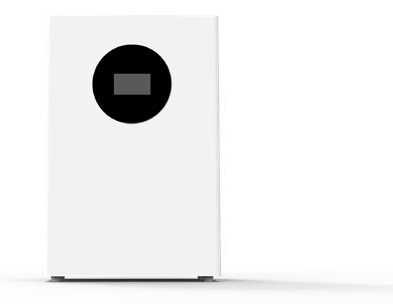
ES-LV series
Touch screen, Bluetooth and WiFi, and a built-in aerosol fire extinguisher. 15 and 16 kWh models rated for 8,000 cycles.
View specifications →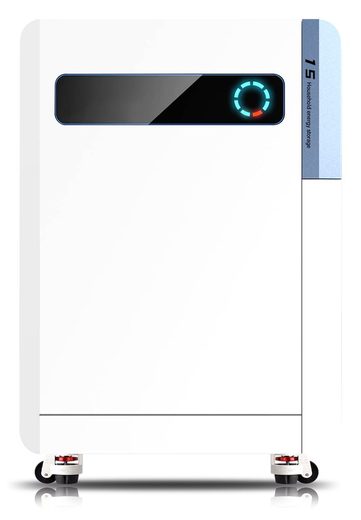
KNY 51 series
Four capacities in one family: a 5 kWh wall unit and 10, 15 and 16 kWh floor units, all IP65.
View specifications →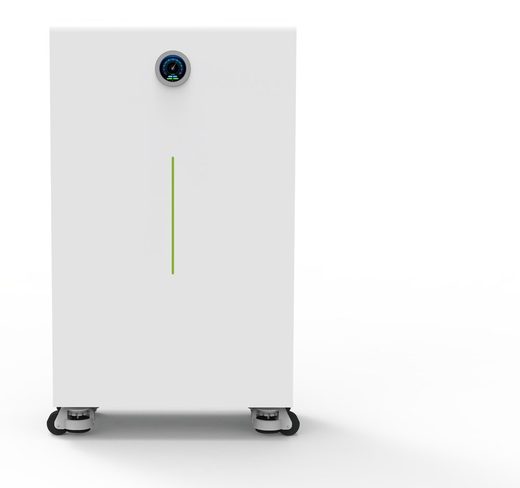
ESS-H series
IP65 floor battery with Bluetooth, WiFi and a built-in aerosol fire extinguisher. The most compact of the three ESS styles.
View specifications →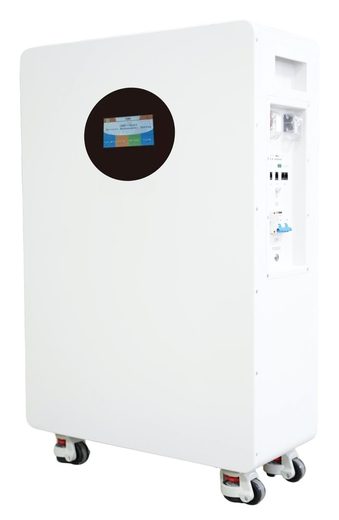
ES-LV-20
High-capacity 51.2 V cabinet on wheels for whole-home storage in a garage or utility room.
View specifications →Importing into Pakistan
- Customs value
- Pakistan Customs assesses duty on lithium battery packs (PCT 8507.6000) at values set by the Directorate General of Customs Valuation; the current ruling, No. 2062 of 2026, was issued in April 2026. Your clearing agent confirms the duty and taxes before you order.
- Shipping
- LiFePO4 batteries go by sea as Class 9 dangerous goods, with the UN38.3 test summary and MSDS, to Karachi Port or Port Qasim.
- Your documents
- Commercial invoice, packing list, datasheets and the CE, UN38.3 and MSDS documents listed for each model.
Import rules change. Your clearing agent has the final word on what each shipment needs.
Which battery for a 6 kW hybrid inverter?
At full load a 6 kW inverter draws about 125 A from a 51.2 V battery. One 16 or 20 kWh unit (200 A maximum) can supply that; if it runs near full power for hours, two 10 kWh units in parallel keep each one near its recommended 100 A.
How long will a 10 kWh battery last during load-shedding?
About 8 hours at an average load of 1 kW, or about 27 hours at 300 W for lights, fans, a fridge and Wi-Fi, using 80% of the stored energy. The 10 kWh page has the full table.
Is a battery still worth it under net billing?
Under net billing, exported units are bought back at a lower rate than grid units are sold. Storing the afternoon surplus and using it in the evening means fewer evening units bought at the full tariff.
Can a lithium battery replace my tubular batteries?
Yes. In a 48 V system one 51.2 V lithium battery replaces a bank of four 12 V batteries in series. Set the inverter’s battery type to lithium, or connect the CAN / RS485 cable so the inverter reads the battery directly. The charge voltage must not go above 58.4 V.
Will it work with my inverter?
Our 51.2 V batteries talk to inverters over CAN and RS485, and most models also have RS232. Send us the inverter brand and model and we check the communication protocol before you order.
Get a quote for Pakistan
Tell us the inverter size, the capacity your customers ask for and the quantity. We reply with a matched model, datasheet and price.