Solar batteries for dumsor in Ghana
51.2 V LiFePO4 batteries from 5 to 20 kWh for 48 V inverters, so homes, shops and offices keep the lights, fridges and fans on when the power goes off. Shipped by sea to Tema.
What we keep in mind for Ghanaian installs
Backup through dumsor
A 5 kWh battery runs a fridge, lights, fans and Wi-Fi (about 300 W) for roughly 13 hours; 10 kWh doubles that.
Replacing lead-acid banks
In a 48 V system, one 51.2 V lithium battery takes the place of four 12 V batteries in series.
Start small, add later
Most of our 51.2 V models run up to 15 units in parallel, so a customer can start with one battery and add more.
Which battery for which inverter?
Swipe sideways to see all columns →
| Inverter | Battery current at full load | What we suggest |
|---|---|---|
| 3.5 KVA (about 3 kW) | 62 A | One 10 kWh unit (100 A recommended), or two 5 kWh units in parallel |
| 5 KVA (4–5 kW) | 82–103 A | One 10, 15 or 16 kWh unit runs at about its recommended 100 A; add a second unit for long full-power use |
| 7.5 KVA (6–7.5 kW) | 123–154 A | One 16 or 20 kWh unit (200 A max), or two 10 kWh units if it runs near full power for hours |
| 10 KVA (8–10 kW) | 164–206 A | Two 10–20 kWh units in parallel, so each stays near its recommended 100 A |
Rule of thumb: about 20 A of battery current per kW of inverter output at 51.2 V, allowing for about 95% inverter efficiency. 5 kWh units are rated 50–70 A recommended and 100 A maximum; our 10–20 kWh units 100 A recommended and 200 A maximum. Check the kW rating on the inverter label: a KVA figure is often a little higher than the real output. Runtime is a separate question; see the capacity pages.
Guides: What size battery for a 5 KVA inverter? → · Lithium or tubular? → · How many solar panels for a 10 kWh battery? →
Compare by capacity
5 models compared side by side
Compare 5 kWh batteries → 10 kWh 51.2 V · 200 Ah · 10.24 kWh4 models compared side by side
Compare 10 kWh batteries → 16 kWh 51.2 V · 314 Ah · 16.08 kWh14 models compared side by side
Compare 16 kWh batteries → 20 kWh 51.2 V · 400 Ah · 20.48 kWh4 models compared side by side
Compare 20 kWh batteries →Models to start with
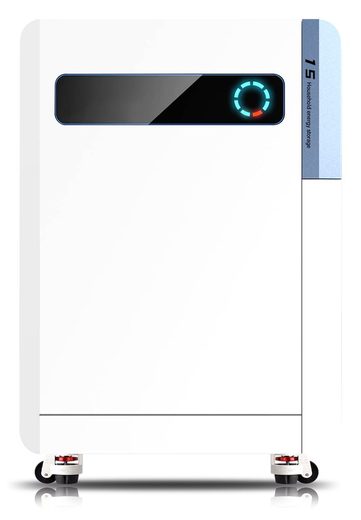
KNY 51 series
Four capacities in one family: a 5 kWh wall unit and 10, 15 and 16 kWh floor units, all IP65.
View specifications →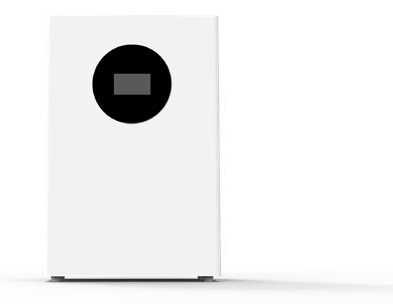
ES-LV series
Touch screen, Bluetooth and WiFi, and a built-in aerosol fire extinguisher. 15 and 16 kWh models rated for 8,000 cycles.
View specifications →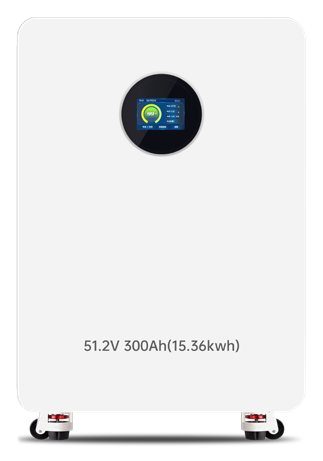
KNY-P51300
15 kWh in one 51.2 V unit with 200 A maximum charge and discharge current.
View specifications →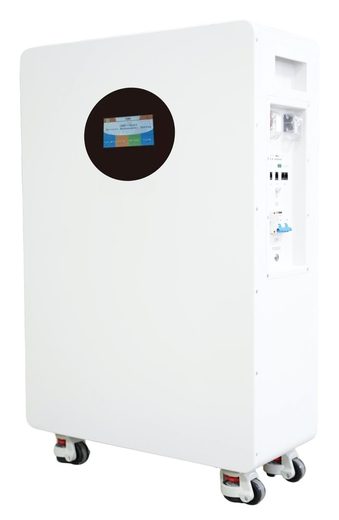
ES-LV-20
High-capacity 51.2 V cabinet on wheels for whole-home storage in a garage or utility room.
View specifications →Importing into Ghana
- Energy Commission
- Ghana’s Energy Commission licenses companies that import renewable energy products, and since 1 December 2025 it enforces energy-efficiency and labelling regulations that include renewable energy batteries. Check the current registration and labelling requirements with the Commission before you ship.
- Shipping
- LiFePO4 batteries go by sea as Class 9 dangerous goods, with the UN38.3 test summary and MSDS, to Tema.
- Your documents
- Commercial invoice, packing list, datasheets and the CE, UN38.3 and MSDS documents listed for each model.
Import rules change. Your clearing agent has the final word on what each shipment needs.
What size battery do I need for a 5 KVA inverter?
A 5 KVA inverter delivers about 4–5 kW and draws about 80–100 A from a 51.2 V battery at full load. One 10, 15 or 16 kWh unit runs at about its recommended 100 A; add a second unit if it runs near full power for hours.
How long will a 10 kWh battery last during dumsor?
About 8 hours at an average load of 1 kW, or about 27 hours at 300 W for a fridge, lights, fans and Wi-Fi, using 80% of the stored energy. The 10 kWh page has the full table.
Can a lithium battery replace my lead-acid batteries?
Yes. In a 48 V system one 51.2 V lithium battery replaces a bank of four 12 V batteries in series. Set the inverter’s battery type to lithium, or connect the CAN / RS485 cable so the inverter reads the battery directly. The charge voltage must not go above 58.4 V.
Do I need an Energy Commission licence?
Companies that import or install renewable energy products in Ghana are licensed by the Energy Commission. We send the datasheets and the test reports we hold (CE, UN38.3, MSDS) for your registration.
Will it work with my inverter?
Our 51.2 V batteries talk to inverters over CAN and RS485, and most models also have RS232. Send us the inverter brand and model and we check the communication protocol before you order.
Get a quote for Ghana
Tell us the inverter size, the capacity your customers ask for and the quantity. We reply with a matched model, datasheet and price.